
Applying Operations Science
To The Work At Hand
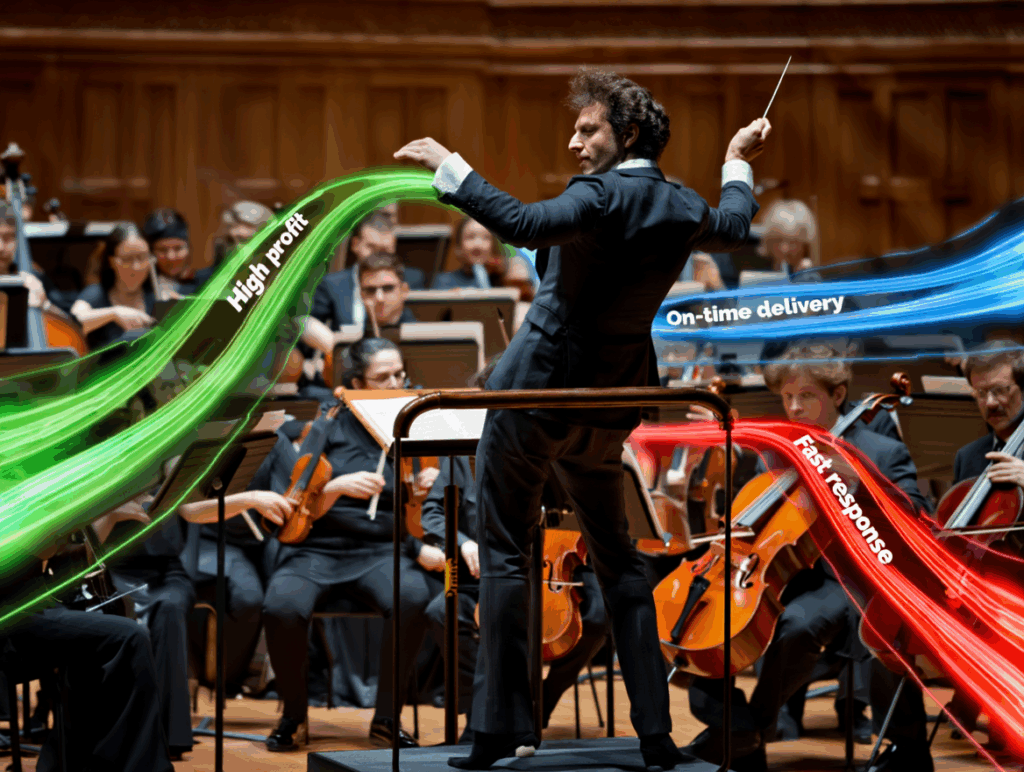
OSI engagements focus on adapting and applying operations science across teams and organizations — developing strong coordination, unifying efforts, and improving on-time delivery, response time, and cost in real operating environments.
Our Approach
How OSI Thinks About Engagements
Learning builds understanding. Engagements apply that understanding to real work. OSI engagements are designed for organizations that want to move beyond concepts and directly address performance using their own data and terminology. No new software or expensive consultants needed.
Rather than delivering generic programs, OSI works with leaders and teams to adapt the concepts to the organization’s terminology and create tailored examples to support rapid understanding and effective application by the people doing the work.
This, in turn, translates into rapid, sustainable improvements in performance because it is the leaders and teams doing the work who are applying the concepts
A curated path from learning operations science to applying it across your organization.
The effect is to create long-term, sustainable success because the knowledge becomes embedded in how the organization operates, not installed as a program that fades when attention moves elsewhere.
— Delta TechOps Shop Technician, cited by Mike McBride, Vice President of Maintenance Operations | Delta TechOps, Delta Air Lines"We used to think we had 30 problems and 30 solutions because that’s about how many people work in the shop, and everyone had an opinion. Now, after operations science training, we have realized we have about four main problems, and we are all focused on solving those problems."
Fit and Timing
When Engagements Are Appropriate
OSI engagements are most effective when organizations are facing conditions that require shared understanding and coordinated action, when individual skill development alone is necessary but not sufficient to achieve desired results.
- Facing persistent performance gaps despite extensive effort
- Onboarding new leaders who need to form strong, cohesive management
- Managing complex, interdependent work across functions
- Experiencing tension between local efficiency and overall results
- Preparing to adopt operations science at scale
Engagements are not about installing tools. They are about building a powerful, shared understanding that accelerates performance with existing people and resources.
Service Offerings
Types of Engagements
Every organization has different stages of its operations journey. OSI’s three engagement models are designed to deliver results whether you are building foundational understanding, solving a specific performance challenge, or developing organization-wide capability.
Team Certification with Expert Mentoring
The fastest way to move an organization is to move its leadership team together. In Team Certification, a cohort of leaders and internal influencers take OSI's online courses concurrently while an OSI expert meets with the group regularly. The OSI mentor helps connect the science directly to the team's own operations, decisions, and challenges. The result is shared language, aligned judgment, sharpened focus, and the internal credibility needed to sustain change.
Assessment and Advisory Support
Structured assessments provide leaders with clarity on how their system behaves and where leverage exists to improve performance. Assessments are paired with expert review and discussion to interpret patterns, uncover opportunities, and guide next steps. Leaders leave with a sharper picture of cause and effect in their own operating environment and a clear path to action.
Custom Training and Application
Custom engagements adapt operations science concepts to the organization's own data, terminology, and operating environment. These engagements often combine focused training with follow-on coaching to support adoption and sustained application thereby ensuring that what is learned is immediately connected to how the organization makes decisions and manages work.
Getting Started
How Engagements Typically Begin
Most engagements begin in one of three ways. In all cases, the goal is the same: connect operations science to specific work and decisions to rapidly improve performance.
How it works
-
1
A Leader Who Has Learned and Wants to Apply
A leader who has studied operations science individually and is ready to bring the concepts to their team and organization with expert support to do so effectively.
-
2
A Team Preparing for Broader Adoption
A functional group or leadership team wants to develop shared capability in operations science and build the foundation for wider application.
-
3
An Organization Seeking Clarity Before Change
An organization is considering a large commitment to an operations initiative, such as improving the order-to-cash process, increasing on-time performance, optimizing inventory, or reducing cost and wants a structured assessment to clarify what is possible and where to begin.
In all cases, the goal is the same: connect operations science to specific work and decisions to rapidly improve performance — not to install a program, but to change how the organization thinks and operates.
The Common Thread
Whether starting with a single leader, a team, or an enterprise-wide effort, OSI engagements are designed to accelerate performance by building understanding that is durable, practical, and embedded in how work is managed every day.
Learning and Application
Relationship to OSI Learning
Learning focuses on developing individual judgment and shared understanding. Engagements focus on applying that understanding across teams and organizations to the work at hand. The two are complementary and together they create the conditions for lasting performance improvement.
For organizations exploring how operations science could be applied to their work, OSI engagements provide a structured starting point. For individuals who have learned the concepts and are ready to lead their organization through them, engagements provide the expert support to do so effectively.
For readers who want to understand how organizations and leaders typically progress from learning to application, OSI Insider outlines a guided orientation path. Or, contact the OSI to set up a quick conversation.
— Bill Van Sant, General Manager | DeZURIK, Inc.; Honeywell International, Inc.Once you build a core group that both understands and relies upon the operations science–based framework, successful outcomes begin to flow. A team that understands operations science can set up strategies, tactics, and measures for their unique business situation.
How Will You Succeed?
Contact us to learn how operations science can be applied in your organization.